Rabat, the capital of Morocco: what to see and when to go
Rabat, the capital of Morocco, is one of the most fascinating cities in North Africa. Modern and historic at the same time, it combines the charm of tradition with a European touch. In this article we look at what makes Rabat so special, what to see, when to visit and why it matters so much to Moroccan culture.
Rabat is one of the imperial cities and deserves more attention. Often overlooked next to Marrakech or Fes, it is in fact a real gem that harmoniously combines tradition, culture, modernity and natural beauty. If you are planning a trip to Morocco, do not leave Rabat out of your itinerary.
Rabat faces the Atlantic Ocean, along the north-west coast of Morocco. It sits at the mouth of the Bou Regreg river, opposite the city of Salé. Its strategic position makes it easily reachable from the main cities, such as Casablanca (about 90 km away) and Fes (about 200 km).
Why is Rabat the capital of Morocco?
Although many people assume Casablanca is the capital because of its size and economic importance, Rabat has been the political and administrative capital of Morocco since 1912, during the French protectorate. After the country's independence in 1956, Rabat kept its institutional role. It is home to parliament, the ministries, the embassies and the royal residence.
"Rabat is not only the political heart of Morocco, but also a cultural crossroads where past and present live side by side." — Official Moroccan tourism guide
What to see in Rabat: the main attractions
Here is a list of the unmissable sights in Rabat:
1. The Kasbah of the Udayas
The Kasbah of the Udayas is an ancient citadel built in the 11th century. Its white and blue lanes recall Chefchaouen, while the view over the ocean is spectacular.
2. The Hassan Tower
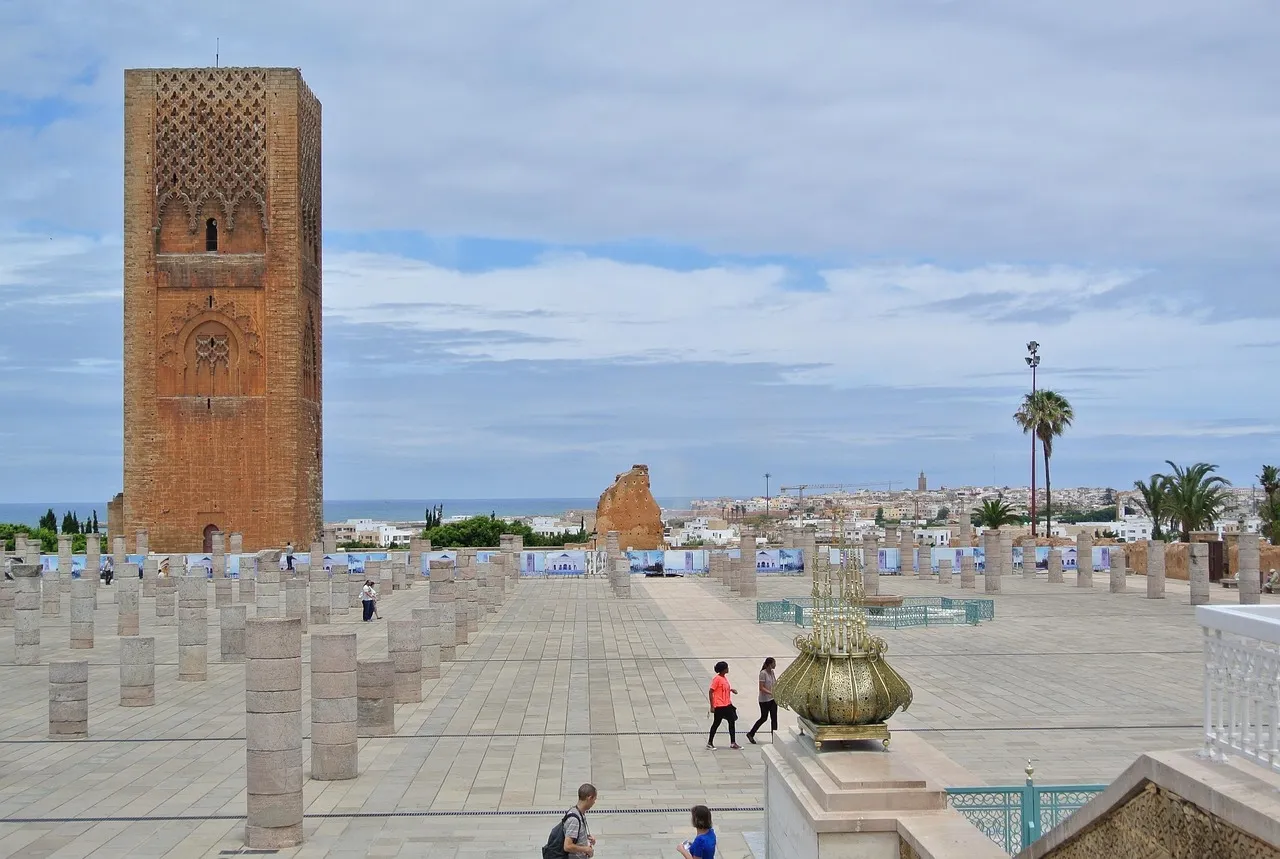
An unfinished 12th-century minaret and the symbol of Rabat. It was meant to be the tallest tower in the Islamic world, but work stopped on the death of Sultan Yacoub al-Mansour.
3. The Mausoleum of Mohammed V
Next to the Hassan Tower, it holds the tombs of Mohammed V and his sons, including Hassan II. The interior is decorated with mosaics and fine marble.
4. The Royal Palace (Dar al-Makhzen)
The official residence of the King of Morocco. The interior cannot be visited, but you can see the exterior and the beauty of the gardens.
5. The Mohammed VI Museum of Modern and Contemporary Art
The first Moroccan museum devoted entirely to contemporary art. An essential stop for culture lovers.
Key facts about Rabat
| Feature | Details |
|---|---|
| Full name | Rabat (الرباط) |
| Population | About 580,000 (metropolitan area: over 1.6 million) |
| Languages spoken | Arabic, French, Berber |
| Currency | Moroccan dirham (MAD) |
| Main airport | Rabat-Salé International Airport |
| Climate | Oceanic Mediterranean, mild all year |
When to visit Rabat?
The best time to visit Rabat is during spring (April to May) and autumn (September to October). The weather is pleasant, with temperatures between 20 and 26°C. Summer can be hot, but the ocean breeze makes the days more bearable than inland.
Rabat: a city of fascinating contrasts
One of the most striking things about Rabat is its balance between modernity and tradition. On one side, skyscrapers, electric trams and shopping centres. On the other, historic souks, traditional hammams and royal palaces. The city is perfect for anyone who wants to immerse themselves in Moroccan culture without giving up comfort.
A few reasons why it is worth visiting
- It is quieter than Marrakech or Fes.
- It offers a rich cultural life: festivals, exhibitions, cinema.
- Its city beaches, such as the Plage de Rabat, are ideal for relaxing.
- It is well connected by public transport and fast trains (ONCF).
Events and local culture
Rabat hosts culturally significant international events, such as:
- Mawazine Festival: one of the largest music festivals in the world, with international artists.
- International Auteur Film Festival.
- Rabat Design Week: dedicated to art and urban design.
These events attract tourists and creatives from all over the world and reflect the dynamic soul of the city.
Is Rabat a destination for everyone?
Yes, absolutely. Whether you are a cultural traveller, a photographer, a lover of the sea or a family on holiday, Rabat has something for everyone. It is a safe, clean, modern and very welcoming city.
How to reach Rabat
You can reach Rabat easily:
- By plane: via Rabat-Salé airport (domestic and international flights).
- By train: ONCF lines from Casablanca, Tangier, Fes and Marrakech.
- By car: well-maintained motorways connect the city to the rest of the country.
- By bus with CTM or Supratours, if you prefer cheap and comfortable options.
Rabat, the capital of Morocco, is a city that deserves more attention. Often overlooked next to Marrakech or Fes, it is in fact a real gem that harmoniously combines tradition, culture, modernity and natural beauty. If you are planning a trip to Morocco, do not leave Rabat out of your itinerary.
Frequently asked questions
1. Is Rabat safe for tourists?
Yes, it is one of the safest cities in Morocco, with a strong police presence and good infrastructure.
2. Which language is most spoken in Rabat?
Arabic is the official language, but French is widely used in administration and business.
3. How long do you need to visit Rabat?
A stay of 2 to 3 days is enough to explore the main attractions and enjoy the local atmosphere.
Would you like personalised advice for your trip to Rabat or a tour in Morocco? We can help you create a tailor-made itinerary!